Architecture
Zoocache is designed as a high-performance caching layer that bridge the gap between Python's flexible ecosystem and Rust's safety and speed.
Core Components
The system is split into two main layers:
1. The Control Plane (Rust Core)
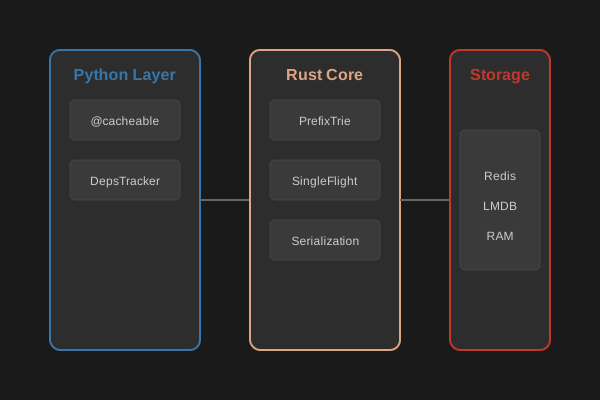
The Rust engine manages the complex logic of the cache: - PrefixTrie: A thread-safe, hierarchical structure that tracks versioning for dependency tags. Includes a Global Version Counter for $O(1)$ validation short-circuiting. - Flight Manager: Handles synchronization to prevent "thundering herd" scenarios for both Sync and Async functions. - Hybrid Logical Clocks (HLC): Ensures causal consistency across distributed nodes by ratcheting timestamps based on wall clocks and logical counters.
2. The Data Plane (Python Wrapper)
The Python layer provides the user-facing API:
- Decorators: @cacheable intercepts function calls.
- Context Tracking: DepsTracker uses contextvars to register dynamic dependencies during function execution.
- Serialization Proxy: Passes Python objects to the Rust core for high-performance processing.
Overall Flow
Trade-offs & Considerations
While the architecture is highly optimized, it introduces complexity: - Trie Memory Leak potential: Nodes are created for every unique tag. Although a pruning mechanism exists, high-cardinality tags require careful management. - FFI Boundary: Crossing between Python and Rust always has a small cost, though Zoocache minimizes this by doing heavy lifting (serialization/hashing) on the Rust side.